This review is a research-based synthesis of 13 published sources, last checked 7 October 2026. We have not played the game ourselves; the scores express our editorial judgment. How we score games
An arm can be worth more than another victory. Lose it and a weapon or shield may become unusable; spend supplies treating an injury and someone else may go hungry. Fear & Hunger builds its horror around a body you have to keep alive. Fighting, resting and helping people all become risks.
Sex is part of that hostility. Nudity, coercion, assault and child-abuse themes accompany a world where vulnerable people have little power. Sexual rituals can offer practical advantages, but the main campaign provides little sustained intimacy or erotic reward. Fear & Hunger can make that ugliness meaningful; it can also mistake another shocking act for a stronger scene.
Sex becomes another survival bargain
The optional Marriage of Flesh ritual makes sex a means of transforming the body. As with blood magic and sacrifice, its appeal comes from what it might help you survive. The choice carries mechanical weight, but scant emotional development: there is little sense of a relationship deepening before intimacy.
Certain defeats can lead to sexual assault, with brief staged events and lasting damage. Other sexual situations are conveyed through text and sound, without showing the protagonist. Choices surrounding an encounter provide some control, but the assaults themselves emphasize its loss. The presentation is blunt and unevenly restrained.
The dungeon's predatory world is convincing when the consequences change how you weigh a risk. It is less convincing when trauma becomes one more ailment to manage. Showing an assault can be a crude escalation of a threat that was already clear. The sexual violence sometimes substitutes shock for emotional precision, and the setting's cruelty does not make every such scene necessary.
Companions give the dungeon human stakes
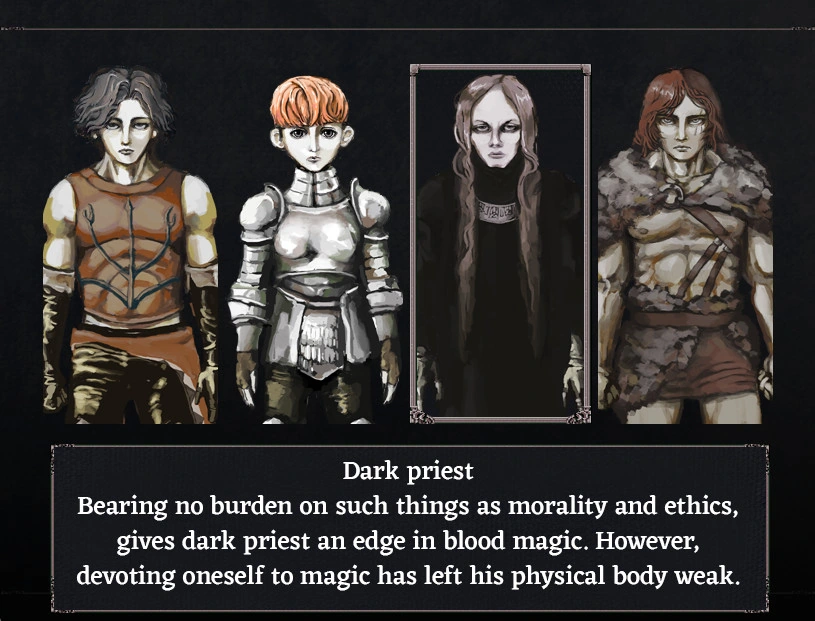
Cahara's mercenary pragmatism, D'arce's loyalty, Enki's search for knowledge and Ragnvaldr's revenge give the four protagonists different reasons to seek the imprisoned Le'garde. Their starting abilities also change what looks practical: access, defence, magic and survival suggest different approaches to the same dungeon.
Companions make those stakes personal. Extra help means extra mouths to feed and bodies to protect. An injured ally changes what the group can do, while fear can make someone reluctant to continue. Keeping a party together feels like an achievement because the survival systems keep making it inconvenient.
The character writing gives that care limited support. Books, optional meetings and stories about gods and mortals carry much of the narrative, leaving intriguing gaps for the player to interpret. Personal motivations establish the expedition well, then often recede behind hunger and injury. The party matters to survival, but does not develop the depth or chemistry of an RPG built around relationships.
Good decisions compete with bad luck
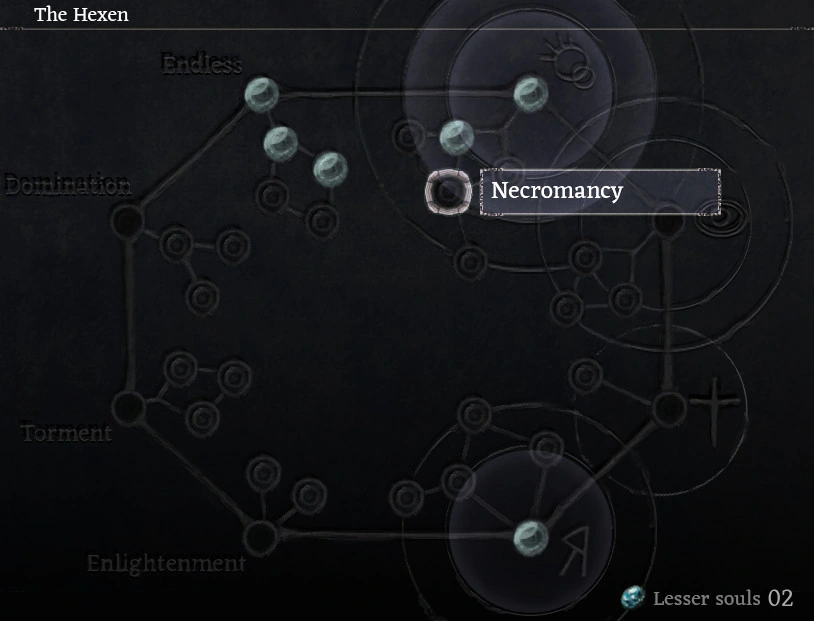
Equipment, learned skills and knowledge drive progression; ordinary battles award no experience points. Limb targeting makes that knowledge useful: disabling the part responsible for an enemy's dangerous attack can matter more than damaging its body. Your own injuries outlast the encounter, so avoiding a fight can be a sound decision.
Magic spends the mind resource you also need to preserve. Cloth can stop bleeding or become a torch. Food relieves hunger without automatically repairing the body, and recruiting another companion stretches what you have. These shared demands are the game's sharpest design: solving one problem consumes something you may need for the next.
Random loot and coin checks interfere with that logic. The dungeon has structures and enemy patterns you can learn, but luck may still withhold a needed resource. Bed saves can fail or put you in danger; consumable saving books provide another scarce option. Losing progress sends you back through familiar corridors, where repetition gradually drains the tension from exploration.
A coherent nightmare with unreliable edges
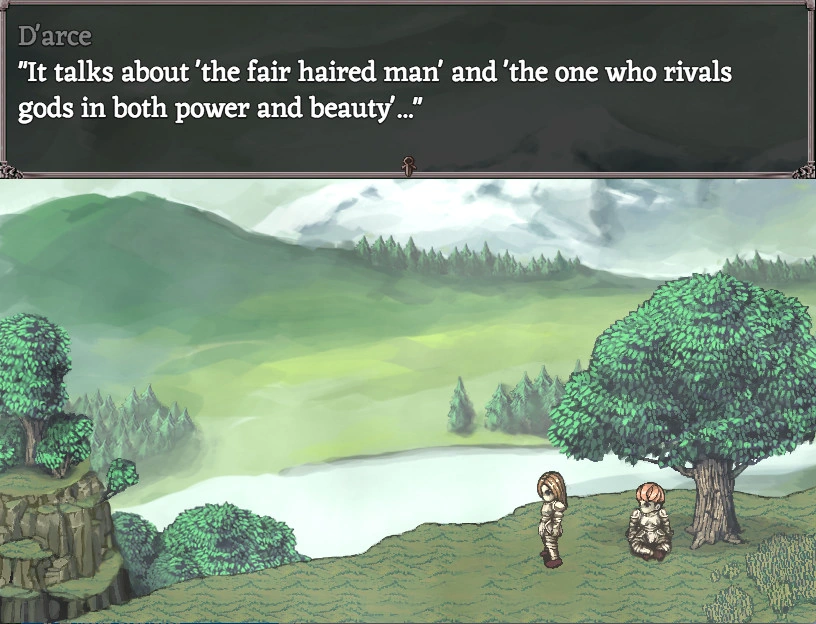
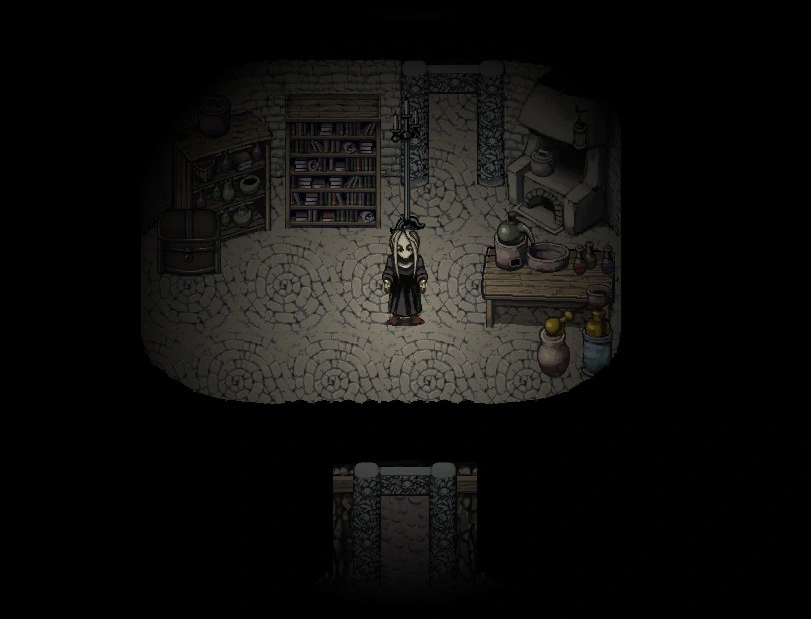
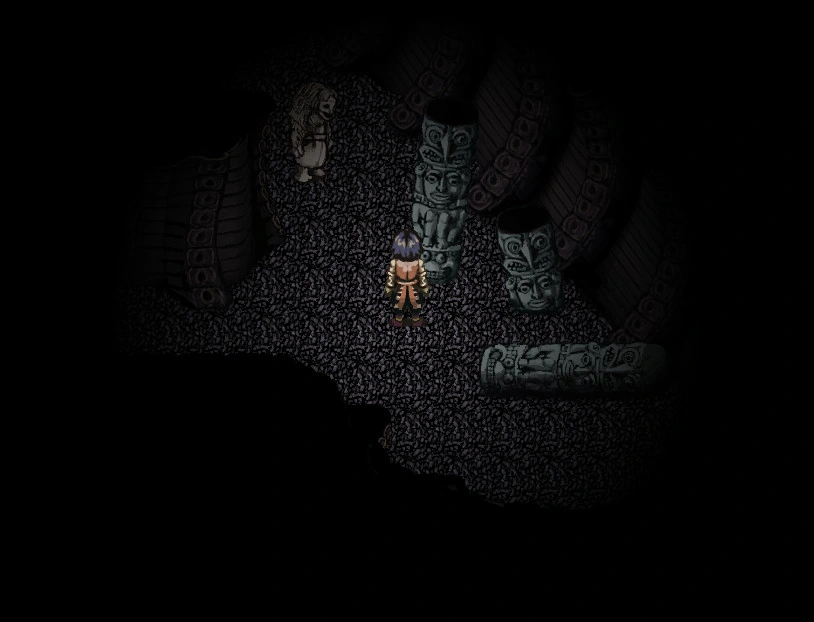
Pixel environments and painted character art give the dungeon a dirty, oppressive identity. Ambient music leaves room for unease instead of turning every fight into a triumph. Beyond the immediate threat to the body, the deeper setting opens into a struggle over divine power. That larger world gives the grotesque imagery an unsettling context.
Exploration, sound and injury reinforce the same insecurity. Winning an encounter can leave the party visibly and mechanically diminished, so even small moments of control feel valuable. The RPG's ordinary systems keep the horror close: you have to decide what your battered group can afford to do next.
Technical roughness makes those choices harder to trust. Reported broken interactions, obscure requirements and inconsistent descriptions make it difficult to tell whether a failed plan was a mistake or a malfunction. Version 1.4.1 addressed specific freezes, black screens and missing graphics, but later player accounts still describe problems. Cruel rules can be compelling; unclear or broken rules are simply frustrating.
Cheap to buy, expensive in patience
At the October 2026 check, the regular US Steam price was $7.99, with sexual content included and no separate adult upgrade. The original campaign is complete, with multiple endings. Character-specific hard-mode conclusions and different approaches give further attempts a purpose beyond recovering from the last failure.
The purchase also includes the unlockable Dungeon Nights bonus mode, a comic dating-game parody. It falls outside this assessment of the main horror campaign. Fear & Hunger 2: Termina is a separate release; its characters, scheduling systems and later development do not add to what you are buying here.
Steam lists Windows and macOS, with English and Russian. The old official Mac build has attracted launch complaints, so modern Mac buyers should check compatibility before paying. Linux is sold through the separate itch offer. The low price buys a substantial dungeon to uncover, but obscure ending requirements and lost progress make patience the larger cost.
Verdict
Fear & Hunger is worth exploring for its oppressive dungeon and consequential survival choices. Limb targeting, scarce supplies and vulnerable companions make horror part of each decision, while the gods and hidden lore reward curiosity. Its sexual violence is less assured: shock sometimes replaces emotional depth, and sparse characterization weakens the impact. The completed main campaign offered strong value at the October 2026 checked price of $7.99, but random saves, opaque requirements and reported bugs make reaching its endings unnecessarily exhausting. Survival is the compelling part; repeatedly retracing old corridors is the price the game too often demands.
What works
- +Persistent injuries and competing resources make survival decisions matter
- +Oppressive art and cosmic-horror lore give the dungeon a distinctive identity
- +Four protagonists, different approaches and multiple endings reward further runs
Drawbacks
- −Random saves, obscure requirements and reported bugs can waste a promising run
- −Gratuitous sexual shock and thin characterization weaken the emotional impact
Questions before you play
Is Fear & Hunger a porn game or a romance RPG?
The main campaign is survival horror with sex, nudity, coercion and sexual violence embedded in its disturbing world. Ritual choices can affect play, but sustained romance and erotic rewards are not its purpose. Child abuse and other severe harm are also part of its themes.
Does the Steam edition need an adult patch or DLC?
Sexual content is included in the paid Steam base game. No separate adult upgrade or DLC was listed at the October 2026 check, when the regular US Steam price was $7.99.
Is the original campaign complete, and what else is included?
The released original campaign has multiple endings, including character-specific hard-mode conclusions. The purchase also includes the unlockable Dungeon Nights parody mode, which is outside this main-campaign assessment. Fear & Hunger 2: Termina is a separate game.
Are the sexual-violence events mandatory?
Several disturbing events depend on choices, encounters or particular defeats. The wider dungeon still contains nudity, sexual menace and abuse themes. Skipping an optional ritual does not guarantee that you will avoid other upsetting sexual material.
Can I gain levels to overcome the difficult fights?
Ordinary battles do not award experience points. Better equipment, learned skills, companions and understanding enemy patterns improve your prospects. Avoiding unnecessary fights conserves resources and reduces the risk of permanent injury; completing endings can still require difficult encounters.
Which platforms and languages does the assessed edition support?
Steam lists Windows and macOS, with English and Russian. Modern Mac buyers should check compatibility because launch failures have been reported. The developer's itch offer separately lists full Windows, Mac and Linux version 1.4.1 files, plus older Windows/Mac demos. Those listings do not establish equivalent behavior across all builds or compatibility with every device.
This review is based on published sources. Its scores express our editorial judgment. How we score games
Sources & further reading +
- Fear & Hunger — Steam ↗
- Steam — current US package metadata ↗
- Miro Haverinen — released full versions and separate demos ↗
- Miro Haverinen — version 1.4.1 update ↗
- Miro Haverinen — delivered endings and bonus-mode update ↗
- Dark RPGs — interview with Miro Haverinen ↗
- Indie Hell Zone — Fear & Hunger ↗
- Steam player account — mastery, obscure requirements and bugs ↗
- Steam player account — resource limits, art and qualified praise ↗
- Steam player account — perseverance and technical roughness ↗
- Steam player account — critical repetition and route friction ↗
- Steam player account — critical broken interactions ↗
- Does the Dog Die — specific content warnings ↗
Last checked 7 October 2026.