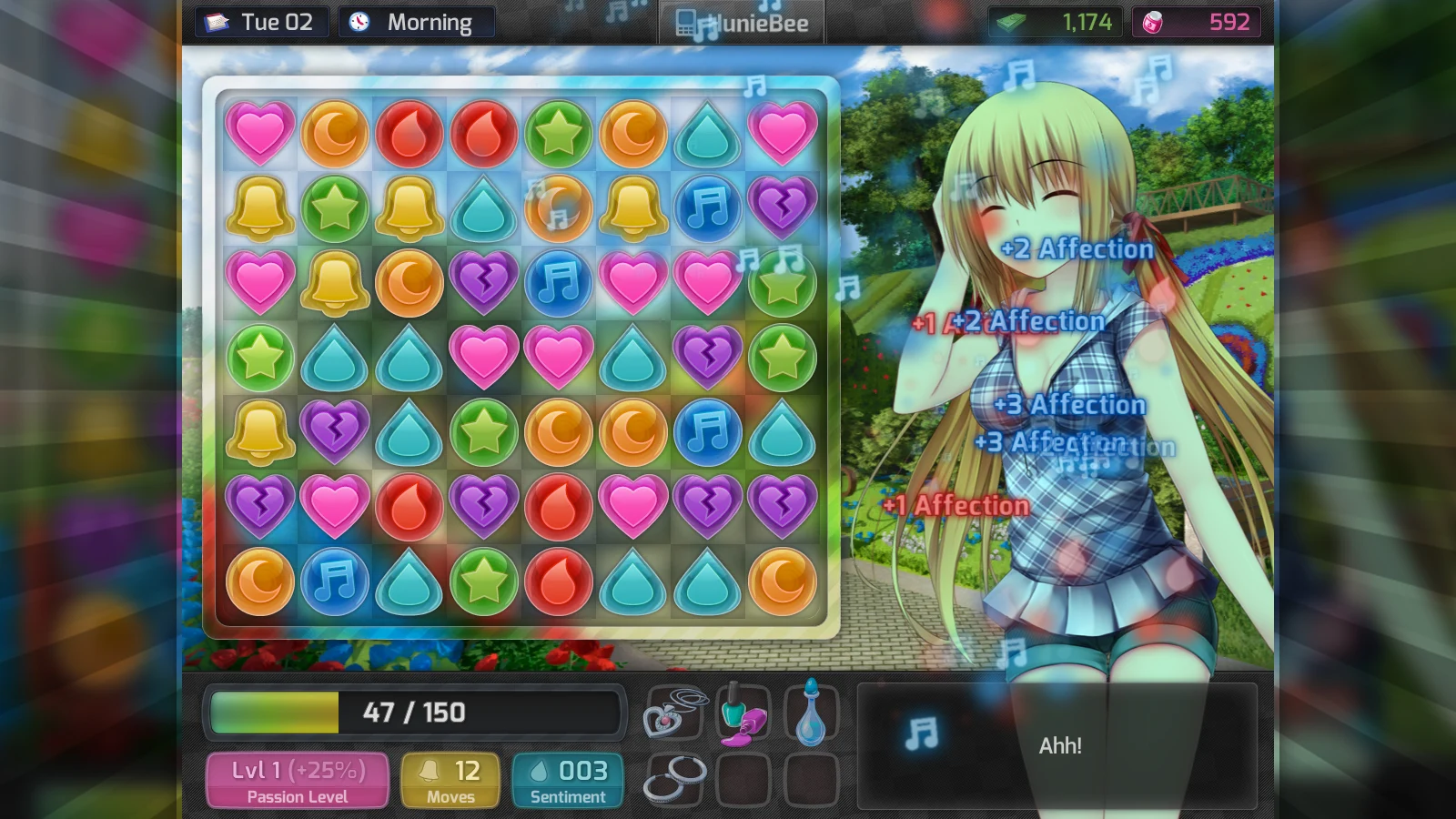
“Overwhelmingly Positive” looks reassuring. It still cannot tell you whether the sex scenes are exciting, the flirting has chemistry, or the reward is worth an evening of grinding. An adult game can win enthusiastic recommendations from puzzle fans while leaving romance readers cold.
Steam’s percentage is a useful starting point. The written reviews should explain what players enjoyed and what they forgave, so you can judge the sex, chemistry and gameplay separately. A strong reputation belongs on the shortlist; it should not settle the purchase.
A recommendation can forgive thin romance

In HuniePop, gifts and preparation feed a satisfying match-three challenge. Its conversations offer much less emotional development than a substantial romance route. One buyer can enjoy the cheeky character art and puzzles enough to recommend it while another finds the thin romance decisive. Both judgments can be reasonable.
Steam asks players whether they recommend a product. If ninety out of one hundred counted reviews are positive, that is a 90% recommendation rate. It does not mean players awarded the game nine out of ten. A thumbs-up can come with reservations about the writing, sex scenes or price.
Read the reservations inside the praise. If a reviewer loves the puzzles but shrugs off the romance, work out which part you came for. A weakness they can live with may spoil the part you wanted most.
Read how the routine affects the sex

Two Cloud Meadow accounts show how those priorities can diverge. A positive review praises pairing variety and describes inherited traits and automation; a negative one acknowledges good animation but finds recurring chores and noninteractive sex tiring. That player wants more relationships and routines. The disagreement gives you something specific to judge: whether the management systems and animated encounters offer enough of the interaction you want.
Useful adult-game feedback describes the encounter: how it develops the relationship, whether it uses a short repeating loop or a longer sequence, and whether the dialogue suits the character. Voices, sound, framing and movement can make the same premise feel intimate or awkward.
“Great boobs” may be an honest recommendation, but it is also a fairly short review of a body. To judge the erotic experience, you need to know what happens before the reveal and whether the scenes stay interesting afterward.
A warning can reveal a good match for your taste

A complaint about infrequent sex may rule out a game for someone seeking a quick erotic session. Someone who wants courtship, tension and sex that feels like a relationship milestone may be more willing to wait. Frequent explicit scenes can be a selling point, or an interruption when you came for a slower romance.
Leap of Faith mixes sexual relationships with a story that deals seriously with depression and suicidal crisis. One player account values its emotional impact; another dislikes the heavy tone after expecting a lighter erotic game. Mood belongs in the buying decision. Even enthusiastic recommendations cannot make it an easygoing choice for every evening.
Read a few substantial positive and negative accounts together. Agreement on a feature is especially useful when the verdicts differ. You can decide whether slow courtship, a heavy tone or repeated farming suits you once you know why one person enjoyed it and another objected.
Check what the reviewer actually bought

Banter can help sell a game's tone. A base game may lack adult content supplied by a separate patch or paid add-on. A season can have satisfying sex scenes while leaving the larger relationship unfinished. Praise for the full available series can therefore make the first installment sound more complete than it is.
Find the edition, chapter boundary or content setting described in the review. If it concerns a patched game, check the publisher’s current instructions for your version. For a complaint about a missing ending, establish whether the reviewer saw an unfinished build or the release now on sale. Do not assume an old complaint was fixed or an old patch link still works.
When a game adds voices, reworks its gallery, changes progression or introduces new paid extras, the review date matters. Those changes can alter the adult experience and the effort or cost of reaching the scenes you want.
Read the hours as carefully as the percentage
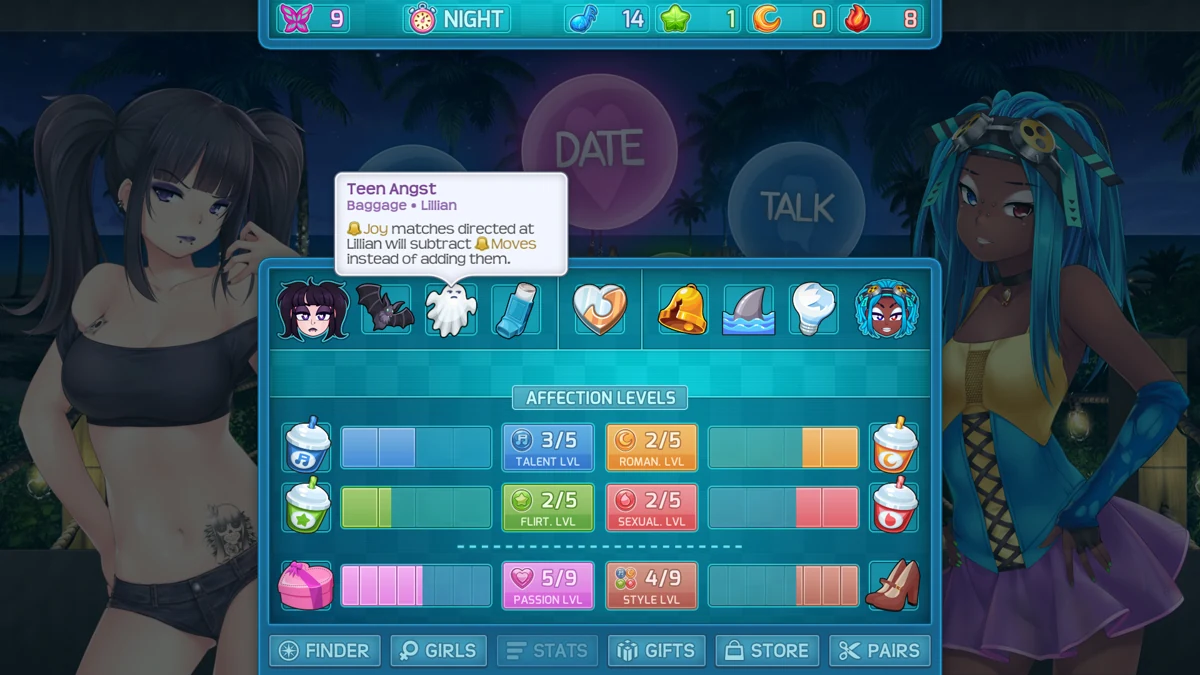
A reviewer’s playtime needs interpretation too. Many hours can reflect affection for the cast, collecting every scene, repeated farming or simply leaving the game running. Read what they did with those hours before treating the number as praise or a completion estimate.
Steam’s recent score covers the past thirty days, while its lifetime score draws on a longer review history. Qualifying games can also display language-specific scores. Check the selected view before comparing percentages. A localization problem can make flirting awkward even when the artwork is identical.
Review counts add context. A small group of enthusiastic fans and a much larger established audience can produce similar percentages while wanting different fantasies. The count tells you how many reviews support the figure. Neither number independently grades scene direction, character chemistry or gameplay; those judgments still need explanation.
Buy for a specific payoff

Decide what you want to reach: animated scenes with a favorite character, a believable romance with an ending, or a puzzle game whose erotic rewards stay varied. Read until you can explain what the game asks you to do and what it gives you in return, including any waiting or repetition along the way.
Price changes what a reviewer may be prepared to forgive. A thumbs-up based on a deep discount or a free introduction may reflect a different tolerance for repetition from yours. When the praise, edition and cost match the experience you want, buying makes sense. If those details stay vague, wait: you still do not know enough about the experience you are paying for.
Questions and answers
Does 90% positive on Steam mean a score of 9/10?
No. It describes the share of counted recommendations in the selected view. It is not an average numerical rating of the game’s sex scenes, writing or gameplay.
What does Steam’s recent score cover?
The recent score covers the past thirty days. Lifetime and qualifying language-specific scores draw on different review groups, so check which view you are comparing.
Why read negative reviews of a highly rated adult game?
They can explain sparse sex, repetitive progression, missing adult content or a heavy emotional tone. Read the specific complaint: a feature that ruins one player’s evening may suit your taste.
Can review playtime tell me how long a romance takes?
Recorded hours can include replays, scene collecting, grinding or idle time. Use the reviewer’s explanation of those hours before treating them as a completion estimate.
Sources & further reading +
- Valve: Steam user-review scores and recent review window ↗
- Valve: language-specific review scores announcement ↗
- Cubed3: HuniePop puzzle and character criticism ↗
- GameFAQs: HuniePop, Decent Pairing But Really Lacking Something ↗
- Cloud Meadow: positive account of systems and animation ↗
- Cloud Meadow: criticism of relationship interaction ↗
- Leap of Faith: player account of emotional impact ↗
- Leap of Faith: player account of adult-scene frequency and closure ↗
- Leap of Faith: a player who disliked the emotional tone ↗
Last checked 5 October 2026.