This review is a research-based synthesis of 18 published sources, last checked 7 October 2026. We have not played the game ourselves; the scores express our editorial judgment. How we score games
Ann wants to be loved and needs money for transition. As she enters sex work, affection, dependence and paying clients become hard to separate. Taylor McCue calls He Fucked The Girl Out of Me a semi-fictionalized autobiography, a way to put difficult experiences into words through Ann’s voice. Its strength is that particular perspective: the decisions she makes and the shame that makes them difficult to explain.
Sex is central, but the game makes no promise of arousal. There is no relationship ladder ending in a rewarding porn scene: intimacy exposes Ann to shame, coercion and other people’s expectations. The complete story is free and brief, yet its account of sexual violence asks for a deliberate choice to engage. Its strongest moments make her need for affection intelligible without making the resulting harm easy to dismiss.
Sex without the promise of pleasure
Ann wants affection; clients assign a price to what they want from her. Her gender and body become objects of other people’s fantasies, leaving little room for her need to be recognized as a person. Fetishization has a cost here: it changes how she understands love and herself. The aftermath of an encounter matters as much as the encounter itself, because she carries that shame into other relationships.
The opening is confrontational, and the story goes on to address rape, dubious consent, transphobia, deadnaming and suicidal thoughts. These experiences shape Ann’s relationships and the way she explains herself; they are not confined to a single shocking scene. Abstract imagery lets her words remain blunt without turning each encounter into a detailed spectacle. The work gains force from following the consequences of harm through her account.
Ann and Sally make trust complicated
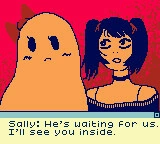
Sally is Ann’s friend, crush and a more experienced sex worker. Her confidence makes the work sound manageable, and Ann’s admiration gives that advice weight. Affection and dependence survive alongside the damage that follows. The writing gives Ann room for contradictory feelings about someone who matters to her, without tidying Sally into a villain or rescuer. That unresolved attachment gives the story its sharpest tension.
Family conversations and encounters with clients expose the same uncertainty about being loved. Ann’s personality emerges through self-doubt, defensive distance and the struggle to explain herself. Fragmented memories can bring those feelings close, but abrupt transitions sometimes cut an encounter short before it has developed. Some passages need more space, however painful the events behind them. The story is strongest when it lets a specific relationship carry the emotion.
A few buttons make pressure tangible

Dialogue choices alter some conversations, including the response to an answer about loving Sally. They invite a reading of Ann’s relationships, though they offer limited control over the account. Some decisions deliberately deny an effective choice, which can make helplessness tangible.
You spend most of the game walking through small spaces and advancing text. Arrow keys move, Space interacts; an XInput controller uses the D-pad and B button. In a food-court sequence, you repeatedly offer free samples and push past another person’s discomfort. Performing the repetition makes ordinary sales pressure uncomfortable, then connects it to questions of boundaries elsewhere in the story. Here, the few buttons do more than turn pages.
Elsewhere, walking and repeated button presses feel like delays between paragraphs. The best interactions sharpen a particular situation; the game does not sustain that purpose across all its routine movement.
Small pixels, difficult memories

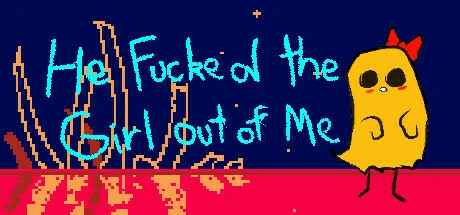
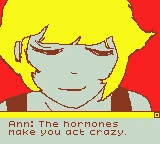
The Game Boy imagery gives memory an unstable form. Ann’s appearance changes, and familiar surroundings become strange, reflecting her difficulty holding a stable image of herself and her experiences. The limited palette leaves room for emotional interpretation without showing every physical detail. Some images feel as hurried as the writing, but the best make that roughness expressive.
There is no voice acting or continuous musical score. In the largely silent presentation, a rare phone sound becomes an intrusion. The quiet suits Ann’s isolation, while leaving dialogue and its presentation to do most of the work. Dense pixel lettering and movement around dialogue boxes can make reading awkward; fullscreen legibility has drawn complaints. Steam players also reported startup failures in May and August 2026, including one who read the separate browser edition instead. These are individual reports, but they make access a concern even for such a small game.
The complete story is free
The free Steam release is a self-contained narrative, estimated by the developer at about 40 minutes. Later announced updates delivered translations rather than another season of episodes. It lists English, Japanese, Brazilian Portuguese, French, Latin American Spanish and Turkish text. Steam advertises Windows; McCue’s separate itch page offers a browser presentation and Game Boy files. Those separate formats do not establish identical builds or a native Mac edition.
The optional Bonus Pack contains an artbook, interviews, early versions and separate games. A ringtone and donation wallpapers provide other ways to support McCue; none is needed to read Ann’s story. As listed in October 2026, the Bonus Pack’s normal US price was $0.99, with a temporary discount to $0.49. Even the expensive wallpaper tiers are supporter extras, rather than chapters withheld from the free base. Revisiting can reveal another conversational response or a different reading of Ann’s attachment to Sally, but it offers little new route material.
Verdict
Read He Fucked The Girl Out of Me for Ann’s voice and her conflicted attachment to Sally. The shifting pixel art deepens its account of sex, money and acceptance, while a few well-chosen interactions make social pressure tangible. Repetitive movement, hurried transitions and awkward text presentation weaken other passages. Those flaws matter, but the emotional specificity makes this a compelling short autobiographical narrative. Expect a difficult account of coercion and sexual violence, with no arousal payoff. The complete story is free; the paid extras are a way to support McCue after reading it.
What works
- +Ann’s contradictory feelings for Sally give the story emotional depth
- +Shifting pixel imagery and the food-court sequence express pressure and disconnection
- +The complete story is free, with optional supporter extras
Drawbacks
- −Abrupt transitions and repetitive movement leave some passages underdeveloped
- −Awkward pixel text and reported Steam launch failures get in the way of reading
Questions before you play
Is He Fucked The Girl Out of Me meant to be erotic?
Sex and nudity are disclosed, but McCue presents this as an account of trauma and sex work. It follows Ann’s experiences of gender, shame, fetishization and intimacy, without an invitation to arousal. No sexual-reward mode or paid adult-content restoration is advertised.
What are the important content warnings?
The base lists rape and dubious consent, date rape, abuse, transphobia, deadnaming, gender dysphoria, suicidal ideation, blood, age-gap material, sexual content and sissification kink. These warnings describe substantive parts of the main account.
How much do the choices change?
There are some dialogue variations, including two responses to an answer about loving Sally. Other options deliberately restrict what you can change. Most play consists of moving through small spaces and advancing text, with limited influence on the narrative. The listed controls are arrow keys and Space, or an XInput controller’s D-pad and B button.
How long is the Steam story, and is it complete?
The developer estimates about 40 minutes from beginning to end; individual reading times will vary. The free Steam base is a complete narrative. Later translations and the separate Bonus Pack add language options and extras, rather than more episodes needed to finish Ann’s story.
Which platforms and languages does Steam list?
Steam advertises Windows, with Windows 10 as the minimum operating system. Text is listed in English, Japanese, Brazilian Portuguese, French, Latin American Spanish and Turkish, without voice acting. The creator’s browser and Game Boy versions are separate offerings. The partial-controller-support label does not establish Steam Deck or other device compatibility.
Do I need to buy DLC to read the story?
No. The complete base is free. The Bonus Pack adds an artbook, interviews, early versions and separate games; the ringtone and four donation-wallpaper tiers are other supporter extras. None is required to finish the story, and no paid adult restoration is advertised. In the October 2026 US listing, the Bonus Pack’s normal price was $0.99, with a temporary discount to $0.49.
This review is based on published sources. Its scores express our editorial judgment. How we score games
Sources & further reading +
- He Fucked The Girl Out of Me — current free Steam base, controls and content notes ↗
- Taylor McCue — original creator page and separate browser/Game Boy offer ↗
- Taylor McCue — creation, pressure and branching interview, July 2023 ↗
- IDFA — creator interview on shame and telling the account ↗
- Developer — delivered Turkish translation, June 2024 ↗
- HFTGOOM Bonus Pack — separate artbook, early versions and games ↗
- Developer — Bonus Pack Japanese release and permanent price reduction, September 2025 ↗
- Ani-Gamers — narrative, Sally and limited control review ↗
- GameGrin — story, ending and dialogue-box friction review ↗
- Humanish — GameFAQs review of art, sound and choice variation, June 2025 ↗
- Steam player — detailed relationships and shame reading, September 2026 ↗
- Steam player — detailed silence, identity and family assessment, January 2026 ↗
- Steam player — substantial objection to narrative craft and limited interaction, February 2025 ↗
- Steam player — good writing and art, but rushed passages, January 2024 ↗
- Steam player — sympathetic but disjointed narrative criticism, April 2024 ↗
- Steam player — fullscreen pixel-font criticism, February 2024 ↗
- Steam player — positive story assessment with Steam launch failure, August 2026 ↗
- Steam player — repeated startup freeze, May 2026 ↗
Last checked 7 October 2026.